
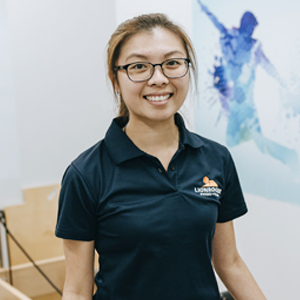
Stephanie Wong
Principal Physiotherapist / Clinical Lead
Bsc Physiotherapy (Curtin University) / APAM
Having always had an interest in health science and fitness and with her love for working with people, Stephanie chose a career in physiotherapy so she could combine the two!
She completed her physiotherapy degree at Curtin University.
Stephanie really enjoys being able to use her knowledge to help people achieve their goals and return to doing the things they love. “It’s rewarding to educate people in making positive decisions and seeing life-changing results.”
Stephanie is the leading physiotherapist in women’s health, pregnancy and exercises. She has completed further education on management of issues along with pregnancy and exercise therapy incorporating Clinical Pilates. You would love to talk to Stephanie about the amazing (or sometimes not so glamorous but still fantastic) experience about your pregnancy and the time spending with your kids!
Stephanie is multilingual. She speaks English, Cantonese, Mandarin and German.
Outside of her work, Stephanie enjoys playing and teaching piano, going to the beach and kayaking.
What are your specific qualifications and clinical focus areas?
I hold a Bachelor of Physiotherapy from Curtin University and am an AHPRA-registered Physiotherapist.
My primary clinical focus areas include:
• Musculoskeletal physiotherapy
• Women’s health physiotherapy
• Back and neck pain
• Joint and muscle injuries
• Exercise rehabilitation
• Pregnancy-related musculoskeletal conditions
• Postnatal rehabilitation
I also provide physiotherapy services for infants, children and adolescents.
My approach combines detailed assessment, education, hands-on treatment where appropriate and individualised exercise-based rehabilitation to support movement, function and overall wellbeing.
How do you keep up with evolving clinical evidence?
I stay up to date through ongoing professional development, including participation in weekly clinical education discussions, reviewing current research and attending external training courses.
I have also completed additional professional development in musculoskeletal rehabilitation ultrasound (RTUS), which has expanded my understanding of musculoskeletal assessment and rehabilitation.
I believe evidence-informed practice involves combining current research, clinical experience and each person’s goals and circumstances to guide treatment decisions.
Why does my pain persist if my scans look normal?
Scans can provide useful information about physical structures, but they do not always explain why someone is experiencing pain.
Imaging is only one part of the assessment process. Pain can also be influenced by factors such as movement patterns, physical capacity, tissue sensitivity, sleep, stress and overall health. Some of these factors cannot be seen on a scan.
This is why physiotherapy assessment focuses on understanding the whole person rather than relying solely on imaging findings. A detailed assessment helps identify factors that may be contributing to symptoms and assists in developing an appropriate management plan.
What hidden or lifestyle factors could be driving my symptoms?
The factors contributing to symptoms vary from person to person and depend on the condition being assessed.
Some common influences include:
• Sleep quality
• Stress levels
• Workplace ergonomics
• Physical activity levels
• Movement habits
• Physical conditioning
• Repetitive activities
• Sporting demands
• Recovery between activities
• Previous injuries
Movement is important, but the quality of movement, movement habits and physical demands placed on the body can all influence how symptoms develop and persist.
Understanding these factors helps create a more personalised treatment approach.
What exactly happens during my initial assessment?
The first appointment begins with a discussion about your symptoms, medical history, lifestyle, activity levels and goals.
The assessment typically includes:
• Understanding your primary concerns and symptoms
• Prioritising issues if multiple areas are involved
• Assessing movement, strength, mobility and function
• Identifying factors that may be contributing to symptoms
• Explaining the assessment findings in clear language
• Developing an individualised management plan
Together, we establish short-term, medium-term and longer-term goals and discuss suitable treatment options, realistic expectations and ways you can participate in your rehabilitation.
Where appropriate, I may also discuss other services or team members who could support your overall care.
How do you tailor a treatment plan to someone with a busy schedule or low fitness?
Treatment plans should be realistic and fit within a person’s lifestyle and commitments.
I work collaboratively with clients to identify goals that are both meaningful and achievable. We discuss recommendations, expectations and practical strategies that can be incorporated into everyday life.
Regular reviews help monitor progress and adjust the plan as needed.
For clients who may benefit from additional supervision and support with exercise, physiotherapist-led Pilates or supervised rehabilitation programs may also be considered where appropriate.
The goal is to create a sustainable plan that supports ongoing progress without becoming overwhelming.
What treatment modalities do you use, and why do you choose them?
Treatment recommendations are based on the assessment findings, individual goals, stage of recovery and current evidence.
Depending on the condition, management may include:
• Manual therapy
• Exercise rehabilitation
• Strength and conditioning programs
• Dry needling
• Shockwave therapy
• Joint mobilisation
• Electrotherapy
• Therapeutic ultrasound
• Strapping and taping
• Movement retraining
• Education and self-management strategies
Different treatment approaches may be appropriate at different stages of recovery. The focus is always on selecting interventions that align with the individual’s presentation and rehabilitation goals.
Exercise, education and active participation are commonly important components of long-term management.
How do we know if the treatment is working?
Progress is assessed using a combination of subjective feedback and objective measures.
This may include:
• Changes in pain levels
• Improvements in movement and mobility
• Changes in strength and physical capacity
• Improved confidence with movement
• Improved participation in work, sport or daily activities
• Progress towards individual goals
Regular reassessment allows treatment plans to be adjusted according to how each person is responding.
The focus is on meaningful improvements that relate to your day-to-day life and activities.
What is your philosophy on complete recovery versus just getting out of pain?
Both symptom relief and long-term recovery are important.
Reducing pain can help people feel more comfortable and confident to participate in rehabilitation. However, recovery often involves more than symptom improvement alone.
My goal is to help people improve movement, strength, physical capacity and confidence while developing strategies that support long-term self-management.
I generally view recovery as helping people return to meaningful activities and equipping them with the knowledge and skills to manage their condition independently where possible.
Will I have to stop doing the sports or activities I love?
Not necessarily.
The answer depends on the nature of the condition, the severity of symptoms and the physical demands of the activity.
In many situations, activity can continue with temporary modifications while symptoms are being managed. This may involve adjusting intensity, duration, frequency or training loads while capacity is gradually rebuilt.
Where appropriate, rehabilitation may include a structured return-to-sport or return-to-activity plan.
The aim is to help people continue participating in the activities that are important to them wherever possible, while taking into account their individual circumstances, goals and recovery needs.